Choose and label
The person and their chosen supporter confirm a familiar item, its usual place and one short instruction.

THIS HOUSE EXPLAINS ITSELF
Scan an item. See where it belongs. Hear a short prompt if you want it.
A label and a familiar picture can make an everyday answer easier to find. We are starting with putting ordinary items back in their usual places.
The Android home trial exists. It is not a released app or a proven disability or dementia intervention.
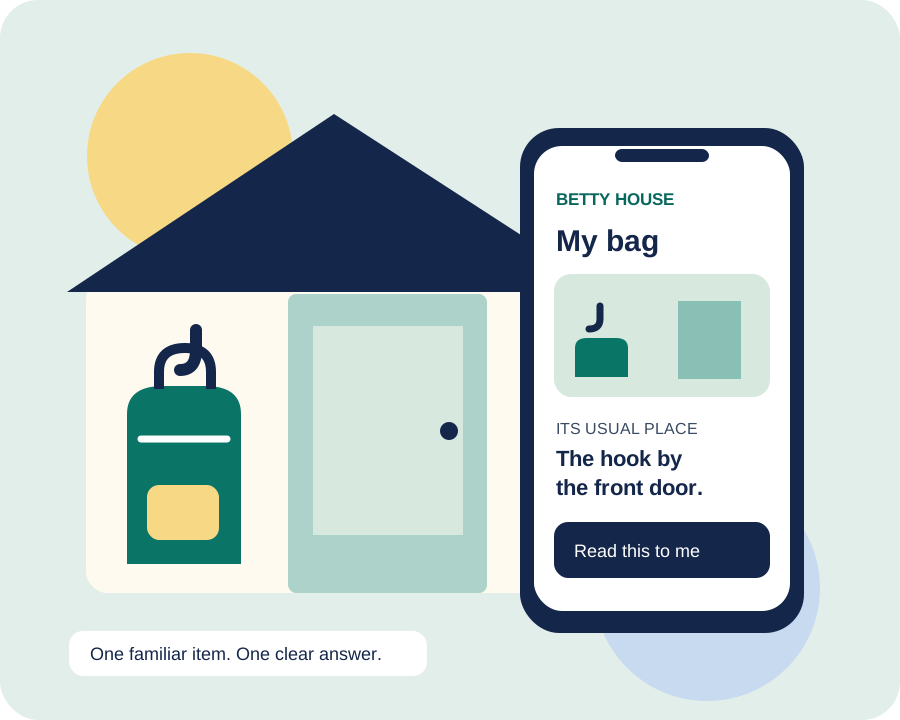
The person and their chosen supporter confirm a familiar item, its usual place and one short instruction.
Scan its linked label in the trial app, or find the item in the app without scanning.
See the chosen place picture and a brief prompt. Optional speech depends on the phone and voice settings.
This demonstration changes between three invented items. It does not scan a code, connect to a household or save information.
Fictional example, not a substitute for trying the installed app.
My bag
Its usual place is
The hook by the front door.Put the bag on its usual hook.
We are exploring this with people who want clearer cues for everyday tasks, including people with disability and their chosen supporters. A good first trial is just three useful objects, not a whole-house setup.
Finding things, tidying and packing a bag are related possibilities. The current home trial focuses on identifying an item and its usual place. Multi-step bag-packing and other routines need their own design and testing.
We would need appropriate co-design, consent, specialist advice and evidence of usefulness before positioning this for people living with dementia. Scanning may not suit every person, setting or stage.
A local Android build includes item and place descriptions, neutral photos, linked labels, an item search and manual transfer snapshots. The trial has been exercised in an emulator. Physical-phone scanning, speech, accessibility and repeated real use still need review.
Different label formats and attachment options are being explored. Production print addresses, suppliers, durability, scan quality, pricing and fulfilment have not been approved. No label pack is available to buy yet.
The current trial stores information on the phone, with manual copies rather than live sync. Anyone who can open the app on an unlocked trial phone can view or change it. Transfer snapshots are not encrypted. Use ordinary items and neutral photos, not sensitive household information.
The intended production design separates printed opaque label references from private instructions and authorised household access. Accounts, invitations, private sharing and independent security review remain to build. A random code alone is not access control.
Can the person scan or find an item, understand the answer and choose to use it again? How long does setup take, and how much assistance is still needed? There is no established product-market fit or clinical benefit evidence yet.
We welcome initial conversations about co-design, suitable pilot partnerships and accessible everyday prompts. Please describe the setting in general terms. Do not send participant names, care notes, diagnoses or household photos.
Opens your email app. An enquiry does not enrol you in a trial or commit you to a purchase.